
I moved to Japan in mid-2013 for work. After graduating from university in August of 2012, I decided to work as an English teacher for a year before going to grad school. It’s now 2025, and I’m still here.
My first apartment was near Omicho Market and the M’za department store in Kanazawa (Ishikawa Prefecture). There was (and still is) a small bookstore in the department store’s basement. Thinking my Japanese was better than it was (and being a lifelong lover of books, libraries, and bookstores), I was wandering around that bookstore in 2013 or early 2014 when I came across a book about the 72 Japanese micro-seasons.
It was impossible to read at the time. There were too many kanji without furigana to look them up, but the book was also filled with lovely illustrations. I have always enjoyed nature and seasonal things, so of course, I bought it.
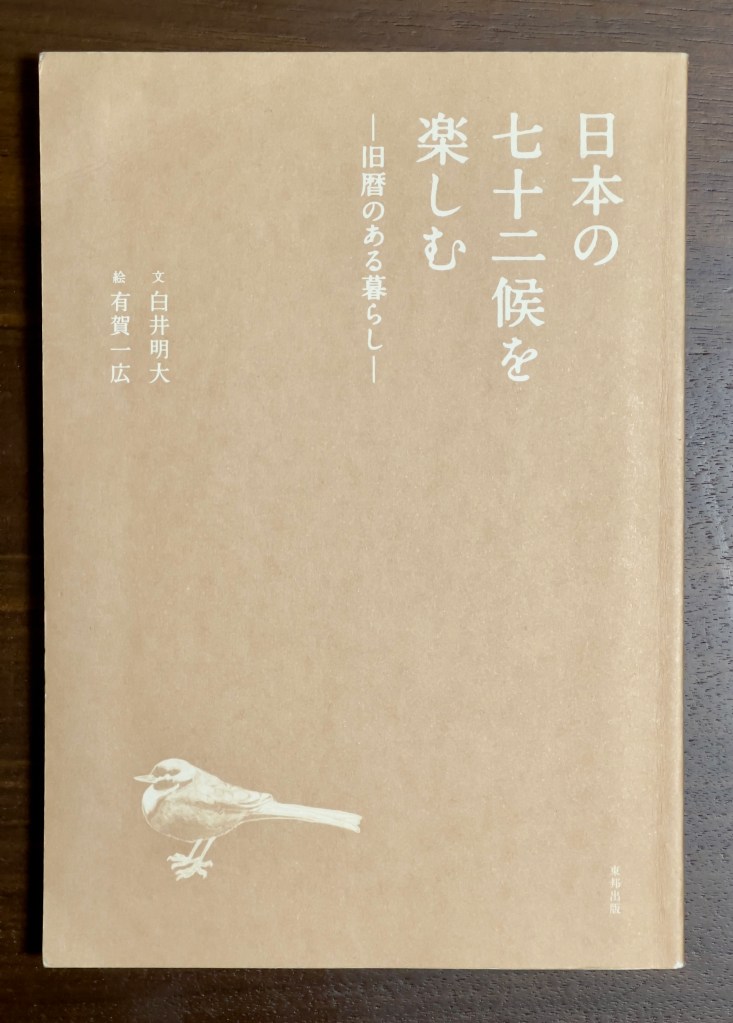
Since then, my Japanese ability has improved (I mean, if it hadn’t, that would be embarrassing). Additionally, translation technology has improved. I also discovered some helpful online kanji resources and acquired a kanji dictionary (or two).
Life got busy and complicated for a while, and I also moved a few times. After one of my moves, I thought I’d lost or somehow thrown out the book. So, I found myself in a bookstore (or two), picking up a newer copy and other books about the Japanese micro-seasons. However, the original book was in a box I hadn’t unpacked, and the decorative dust jacket was gone.
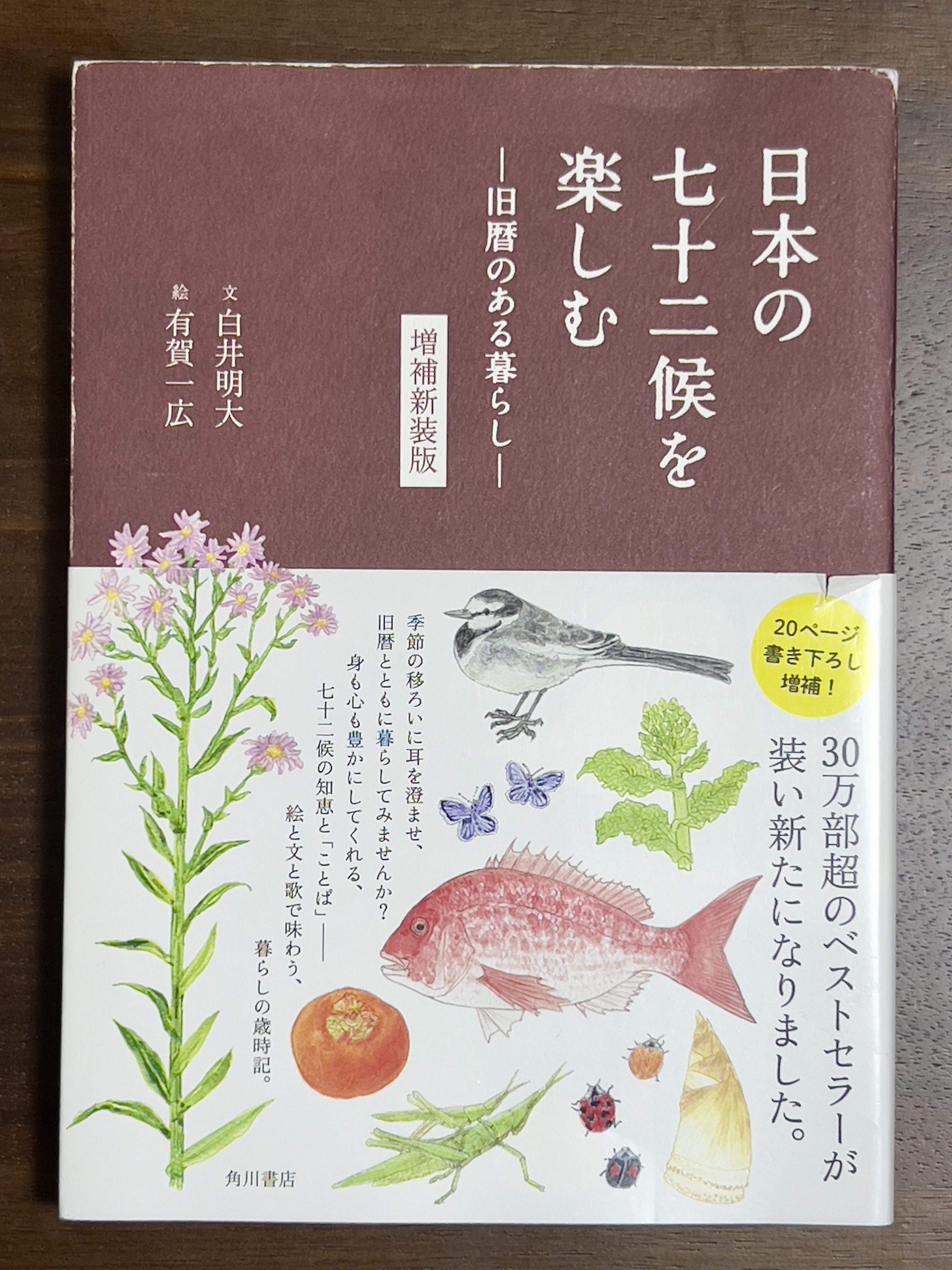
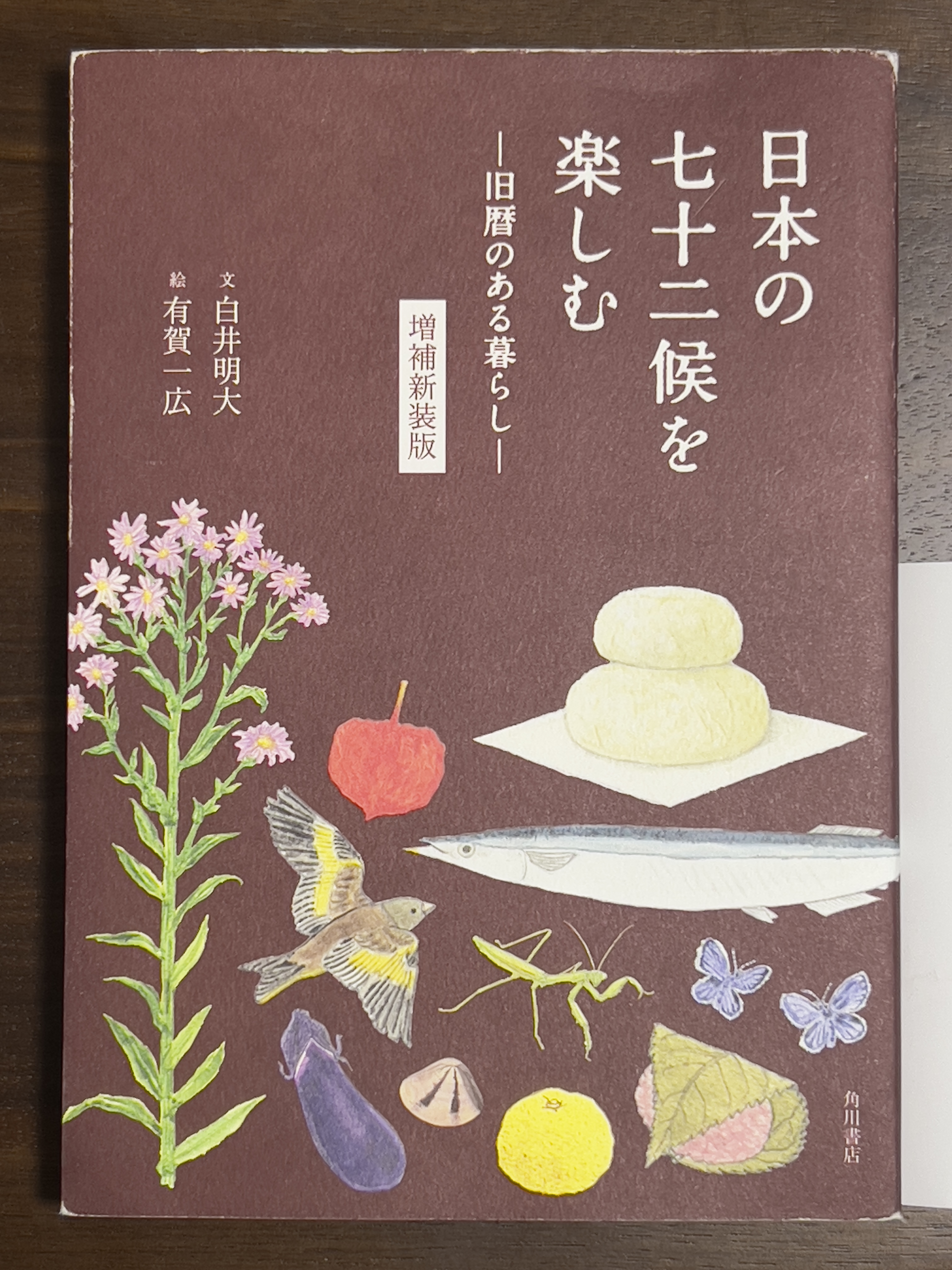
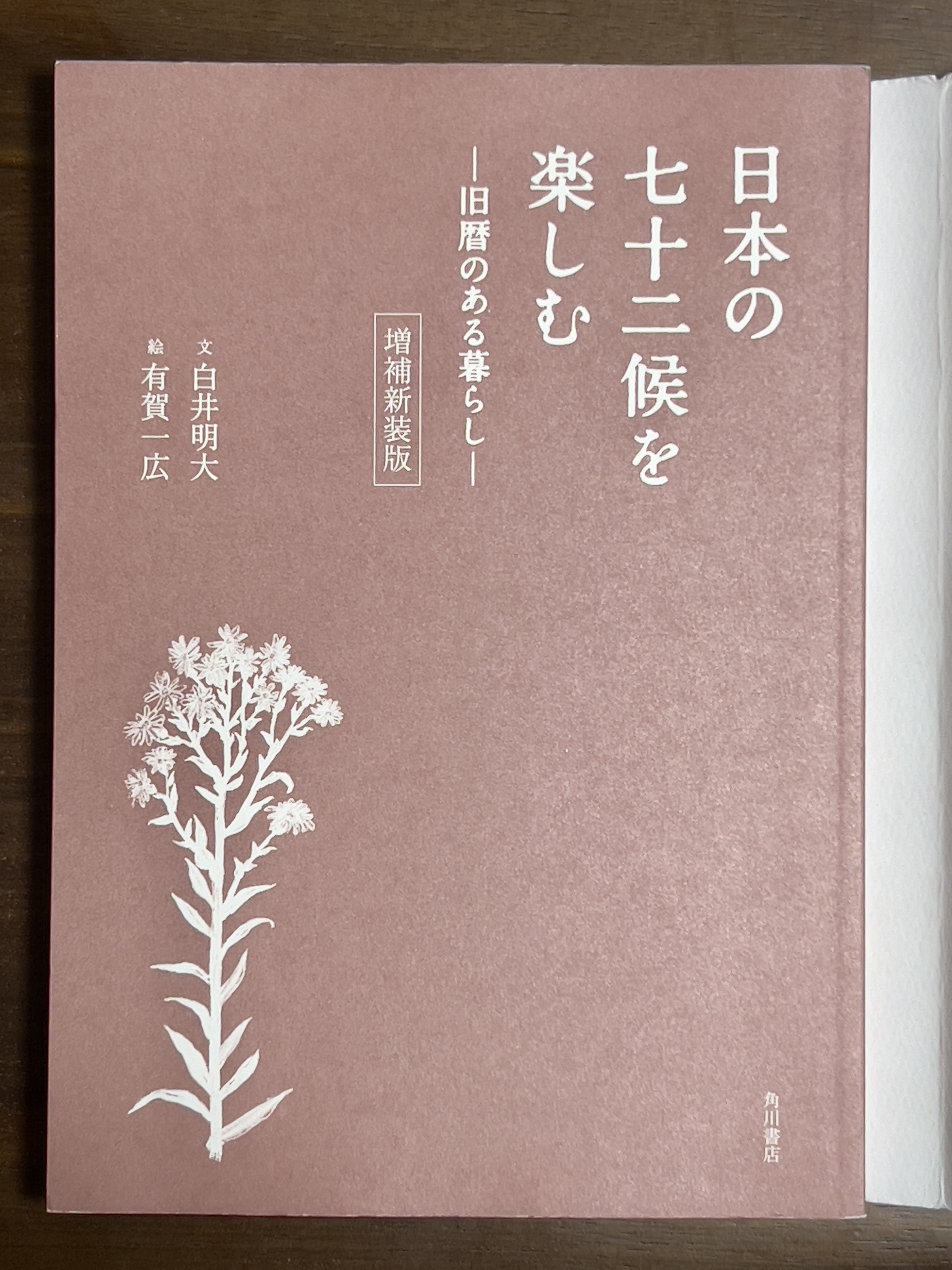
The 2022 edition of 『日本の七十二候を楽しむー旧暦のある暮らしー』(Enjoying Japan’s 72 Seasons – Living with the Lunar Calendar)
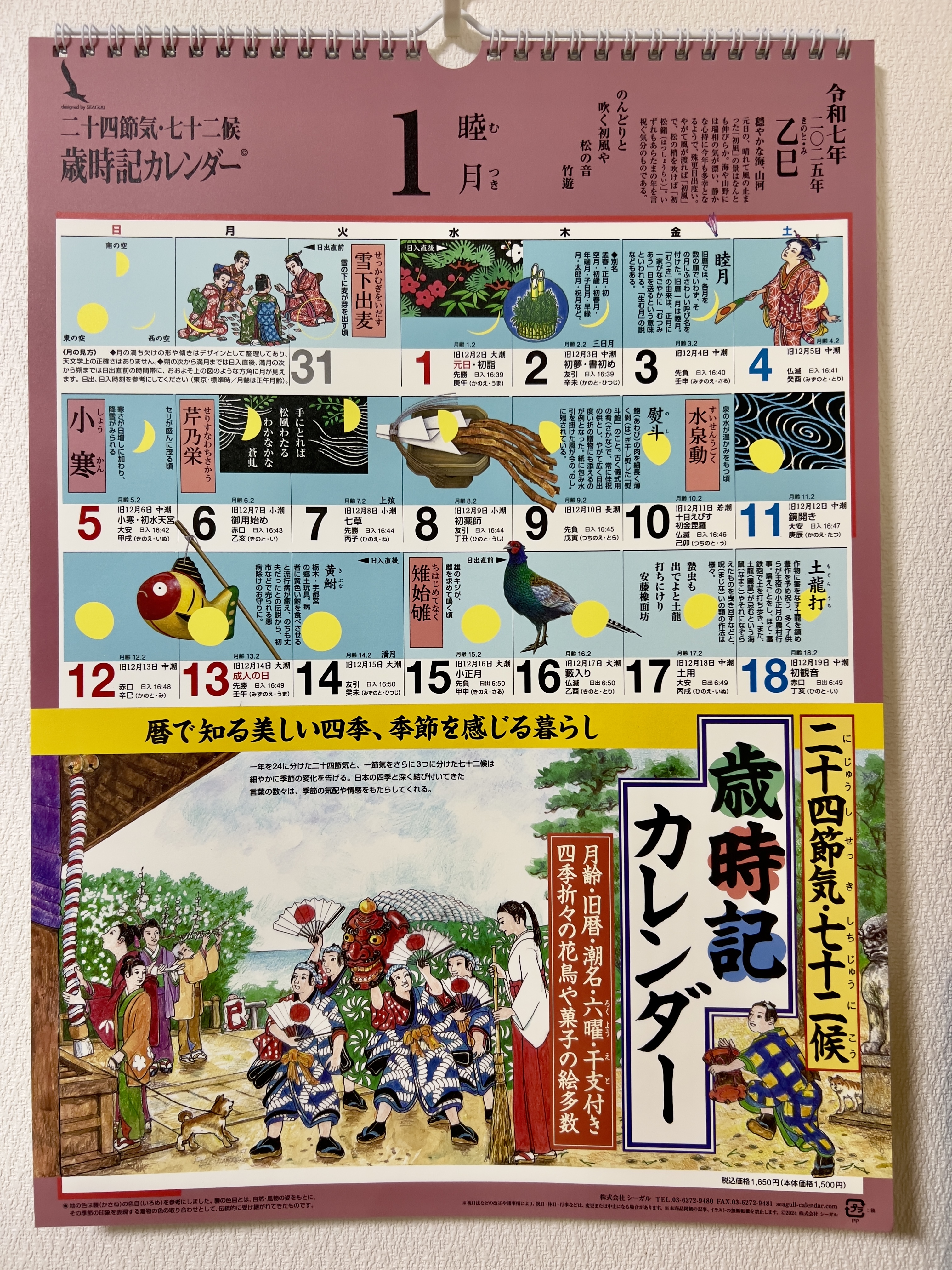
For the past few years, I’ve purchased a calendar that shows information related to the micro-seasons and the dates for that year. The books show the approximate dates, and while there isn’t much variation, it’s nice to know the correct dates for the year. The Traveler’s Notebook was my planner of choice for a long time, but around the same time I started purchasing the calendar, I started using the Hobonichi Cousin and Weeks planners. The planners have the micro-seasons on their calendar pages. That isn’t why I switched planners, but it is a nice little bonus.
Using this book and the other resources I’ve collected, I plan to see how produce and seafood prices align with the seasonal produce and seafood mentioned for the micro-season or month during the year. I live in the countryside, so I’m not sure the price changes will be as noticeable as in the bigger cities, but it could still be interesting. One downside of moving from my first apartment is that I no longer live near Omicho Market. I used to walk there almost daily and see all the seasonal seafood. Although less variety is available, the supermarket will highlight different fish depending on the season.
Since I have two copies of the book that sparked my interest in the 72 micro-seasons (as well as the 24 micro-seasons), I’ll probably dispose of or pass on the original copy I bought. There is no sense hanging on to two of the same book.
A link to a post on my other (currently on hiatus) blog where I briefly mention the book…
 Emi in Fukui